
The short answer
Most exhibition design portfolios look accomplished, so a portfolio alone will not tell you whom to appoint. What distinguishes consultants is how they handle the gaps in your brief, and every brief has some. Put three questions to your shortlist: what would you want to know that isn’t in this brief, how will you test this before we build it, and is the measure we have chosen for success the right one? Good answers are specific about what will be tested and when, and connect the measure to what you want visitors to leave with. Be as wary of a consultant who questions everything as of one who questions nothing, because questioning a brief only helps if it leads to a decision.
If you are the one recommending the appointment, those answers also give leadership a firmer basis for approval than a preference between portfolios.
What a portfolio cannot tell you
If you are shortlisting exhibition design consultants for museums, galleries, and milestone exhibitions for the first time, you will notice something quickly. The work all looks good.
Confident renders. Cutting-edge multimedia. Ambient lighting that makes everything look considered. Every deck is persuasive, and none of them give you an obvious reason to say no.
So what should you be comparing them on?
Most established firms can deliver a gallery that photographs beautifully. Fewer will ask why you are doing this in the first place, or what problem you are actually trying to solve. Without asking that question, most will never know if your brief is solving the right one, let alone tell you while there is still time and budget to change course.
That is the difference between an experience that looks right and one that works when the space eventually opens. And this shows up long before the walls are painted and the lights go up.
Your brief will have gaps. That is normal.
No one writes a perfect brief, least of all for a project type they have not commissioned before. You are often working with visitors you know less about than you would like, on a timeline that was set before the content existed, and with success measures you inherited rather than chose.
Such gaps are a structural feature of this kind of work. The question is what your design consultant does with them.
A consultant who takes the brief literally will build your gaps into the finished thing, faithfully and on schedule. Nothing will look wrong. You will find out at opening, when visitors move through the space differently from how everyone imagined, and no one can point to the moment the decision was made.
So when you review a shortlist, you are not really assessing whether a firm can execute. Assume they can; that is why they are on your list. You are assessing whether they will test the thinking before your budget is committed to it.
Below are two of our own projects. We are including them because they show what testing a brief actually looks like in practice.
When the subject is not one your visitor arrives caring about
The SGH Bicentennial Genomic Garden sits on the Singapore General Hospital campus. It spans 3,400 square metres and holds around a hundred sequenced Southeast Asian ethnobotanical species, studied by an institute set up to translate biodiversity research into medicine. Selected plants carry a QR code. Scanning it opens the garden’s digital layer. We built the first version of that layer in 2024, and the Asian Development Bank’s SEADS platform featured it; the institute has since published the garden as a model in Cell Genomics.
For version 2.0, we rebuilt the layer as a connected trail, and to improve one measure: average dwell time.
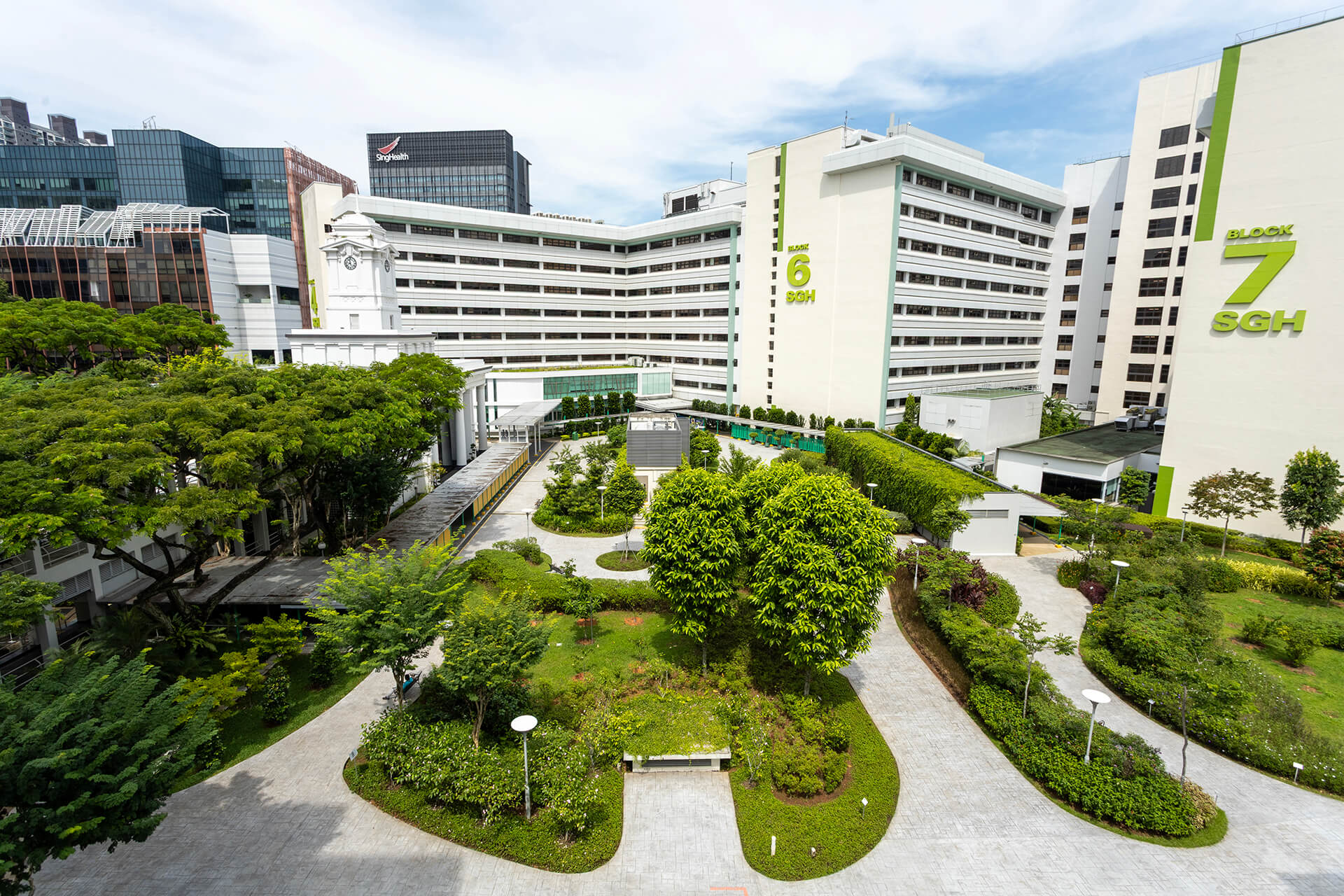
Connecting the content solves for sequence. The harder problem sits underneath it: almost nobody walks into a hospital garden already interested in genomics. The people in that garden are usually patients, families and staff on a break. They are not scientists, and the science is not why they are there.
So the question we took back was not how to connect the trail. It was how to make genomic science relatable to someone who is not a scientist and never expected to encounter it that day.
That is a different brief, and a considerably harder one.
Curry leaf is a clear case. Many of us across the region recognise that deep, savoury aroma instantly, but very few have considered what produces it. The same aromatic compounds that give curry leaf its distinctive smell and flavour also have a calming effect on the mind, and are used in aromatherapy to ease anxiety and improve mood. A plant most people associate purely with cooking turns out to have a life well beyond the kitchen.
That decision, about where a visitor enters the subject matter, then shaped everything else.
Before any content about the plant appears, the first screen asks the visitor to do something with the plant in front of them. Touch a leaf. Smell a flower. Look closely at a detail. It asks for no prior knowledge of anything, only an instinct everybody already has, directed at something already within arm’s reach. It also settles what the phone is for: extending the encounter with the plant rather than standing in for it.

The content then had to begin from something the visitor already knew. Most people in Singapore know that the Vanda Miss Joaquim is our national flower. Far fewer know why it was chosen. Asking that question starts from the half they already have, and the genomics arrives as the answer to a gap in their own knowledge rather than as a lesson nobody asked for.
Average dwell time increased after version 2.0 was launched in May 2026. But dwell time was only ever a proxy. What it stood for was whether anyone had been given a reason to care, and that was the brief we ended up working to.
When the knowledge is the asset, and the didactic delivery is the trap
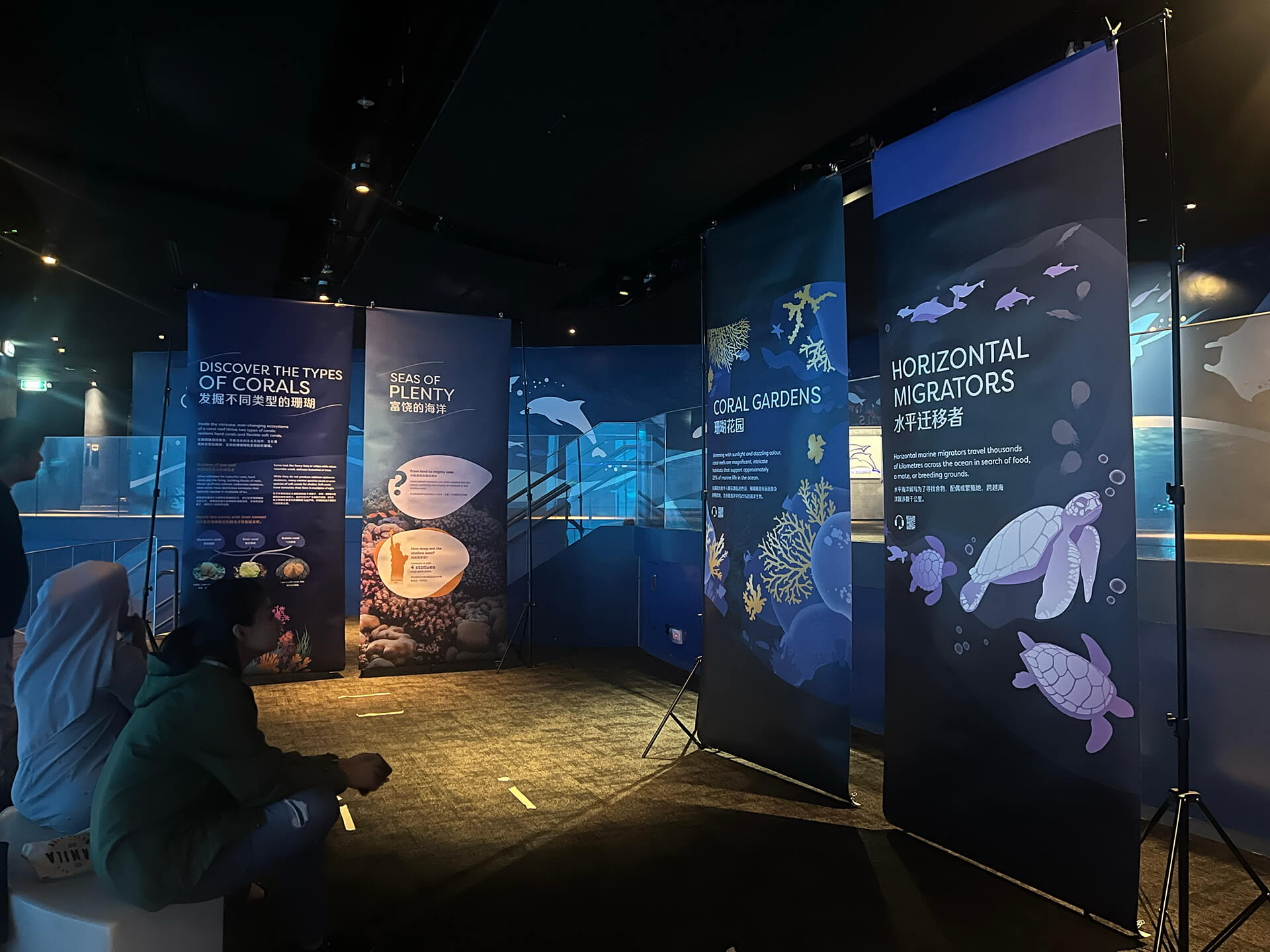
At the Singapore Oceanarium, HOL led storytelling and interpretive design across the institution’s 22 zones.
The Oceanarium holds an enormous body of knowledge about marine life. The task was to convey that knowledge without falling back on the didactic version of it.
Those two requirements are easy to state together and hard to hold together. Accurate, complete text at length is the default outcome of a knowledge-rich brief. It survives every review, because nobody can point at a sentence and call it wrong. It tends to be the version visitors walk past without taking much notice.
So we worked in the opposite order. Before deciding what a visitor would be told, we decided what they should feel, and what we wanted that feeling to move them towards. HOL’s framework for that sequence is Communicate, Resonate, MotivateTM (CRM). The outcome we set for the Oceanarium was deliberately modest: that visitors leave caring more about the ocean. Not that they retain a set of facts, and not that they commit to a behaviour on the day.
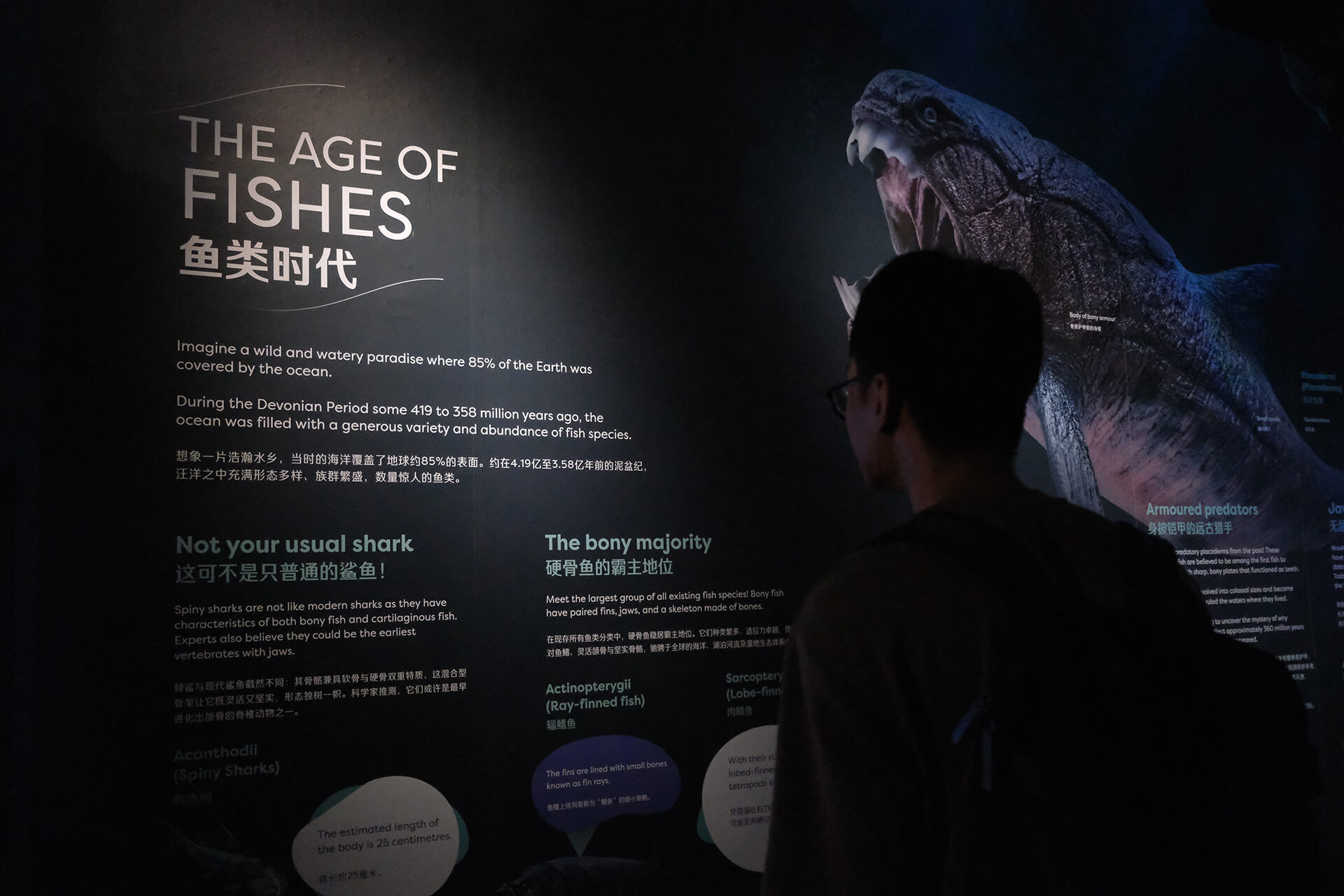
Everything downstream was decided by that choice. For visitors willing to read, the panels carry short pieces written to bring out the wonderment of marine life. For those passing through, prompts like “tips for looking” and “did you know?” offer something to take away without asking them to stop and commit to a full read.
The same logic decides how children are treated. A child standing beside a parent will not engage with the same words at the same height. Placing content and illustrations at a child’s eye level, with visuals that invite them to do something, treats them as visitors in their own right rather than people who have been brought along. This is not a finishing touch. It determines whether a whole segment of your audience is inside the experience or outside it.
The knowledge is all still there. What changed is the order the decisions were made in: feeling first, then message, then medium. Reverse that order and you get the accurate, complete, unread version.
Three questions worth asking your shortlist
These are worth putting to every consultant on your list. Their answers tend to differ more than their portfolios do.
1. What would you want to know that isn’t in this brief?
A strong answer names specific unknowns: what a visitor should be able to take away, who among your audiences is hardest to reach, what the space needs to do in year three. A weak answer reassures you that the brief is comprehensive. These unknowns do not go away just because no one asks about them upfront. They surface later, in month four or five, when they are far more difficult and expensive to resolve.
2. How will you test this before we build it?
Strong answers name methods and when they happen: prototypes, full-scale mock-ups, walking the actual route, and where each of those sits in the programme.
Observation of real visitors is the one worth asking about specifically, and when it happens matters as much as whether it happens. Before any design decision was made for the Singapore Oceanarium, we ran visitor studies at the Sea Aquarium, its predecessor, following the visitor groups the client had identified as the Oceanarium’s target audiences. We watched how they moved, what they talked about, what caught their attention and what they skipped, in shadow so that our presence did not change how they behaved. What we learnt there went on to shape the storytelling and interpretive design we delivered at the Oceanarium.
“We will consult closely with you” is not good enough. It does not tell you what will be tested, or when.
3. We are measuring success by this. Is it the right measure?
A measure you have been given often stands in for something you care about more. On the Genomic Garden, the measure was average dwell time. What it actually stood for was whether anyone had been given a reason to care. Once that was said out loud, what the work had to do became much clearer than the number alone would have made it.
A consultant who simply accepts your measure isn’t testing it. They’re designing toward it regardless of whether it’s actually the right measure.
And one thing to watch for in the other direction
Questioning a brief is only useful if it leads somewhere. A consultant who raises questions and never resolves them has made your project harder, not better. So when a consultant tells you they questioned a brief, ask what happened next: what they proposed instead, what was agreed, and what changed in the design as a result. Good questions are followed by decisions and actions.
What this looks like after you open
None of these decisions show up in a photograph, and that is precisely the problem. A photograph of the Genomic Garden looks much the same whether or not a visitor has been given a reason to reach the tenth plant. A panel reads as a panel whether or not anyone stops at it.
The evidence turns up in the visitor instead. In someone reading one more panel than they meant to. . In what a visitor can still explain to somebody else a fortnight after the visit.
None of that can be seen in a render, and none of it can be checked at a design review. It only becomes visible once your doors are open, by which point putting it right costs enough that most institutions decide to live with it instead.
Nearly all of it could have been prevented, months earlier, by asking the right questions of the brief. Which is why it is worth knowing, while you are still choosing, which of your shortlisted consultants is already asking them.
Questions you might have
What should I look for when choosing an exhibition designer?
Look for evidence that the consultant can connect design decisions to what your visitors should take away. Ask for a project where research or testing changed the brief, why the change mattered, and what evidence they have of the result. Then check that the proposed team has the skills and capacity to deliver your scope. A convincing case study lets you follow the reasoning from the visitor’s needs to the finished experience.
What is the difference between an exhibition designer and an experience designer?
Exhibition design describes the setting: a museum, gallery or exhibition. Experience design describes an approach to shaping what people encounter, understand, feel and do. The work can overlap, and firms use the titles differently. For your shortlist, ask who takes responsibility for visitor research, storytelling, spatial design, testing and delivery. A firm under either title may cover all of these or only some, so the agreed scope matters more than the label.
Do we need a complete brief before appointing a design consultant?
You need a clear purpose and known constraints, rather than every design answer. Set out who the project is for, what it needs to achieve, the available budget and the opening date. Name the uncertainties too. Ask each consultant how they would resolve those gaps, what discovery work is included in the fee, and which decisions need your approval before detailed design begins.
How do we compare design consultancy fees fairly?
Compare fees against the same scope and deliverables. Check whether visitor research, content development, prototypes, testing and revisions are included, and clarify responsibility for fabrication and installation. Ask what would trigger an additional fee. A lower quote may be appropriate for a narrower brief; it becomes difficult to judge when essential work has simply been left unspecified. Leadership should be able to see what each fee buys and what remains for your team to fund or manage.
What should a design consultant test before an exhibition is built?
Test whether visitors understand the central message, find something in it that matters to them, and can respond in the way the experience intends. Check the practical conditions too: can they follow the route, read the panels and use the exhibits? A full-scale panel can reveal problems with text size and placement; a conversation after a prototype visit can reveal what someone understood and why it interested them. Ask when findings will be reviewed and where the programme allows time to act on them.
How should we measure whether an exhibition is successful?
Choose measures that match the intended outcome. If the aim is understanding, ask visitors to explain the message in their own words. If the aim is to deepen their interest, investigate what interested them and why. If the aim is a specific action, agree how you will follow up to see whether it happened. Attendance and dwell time provide context, but cannot establish those outcomes alone. Ask what the evidence can reasonably show and when leadership will review it.