
When you have just been handed a museum, gallery or major exhibition to deliver, the call for tender is one of the earliest opportunities you have to set the direction of the whole project. For a decision made this early, it shapes a great deal of what follows.
How the call is structured shapes everything that follows. Who can bid. How cost stays under control. Whether the vision you began with survives all the way to opening.
There are three ways to structure it, and none of them is wrong. The right choice depends on your project, and the differences are worth understanding before anything is drafted. I have seen all three play out many times, and each has its place.
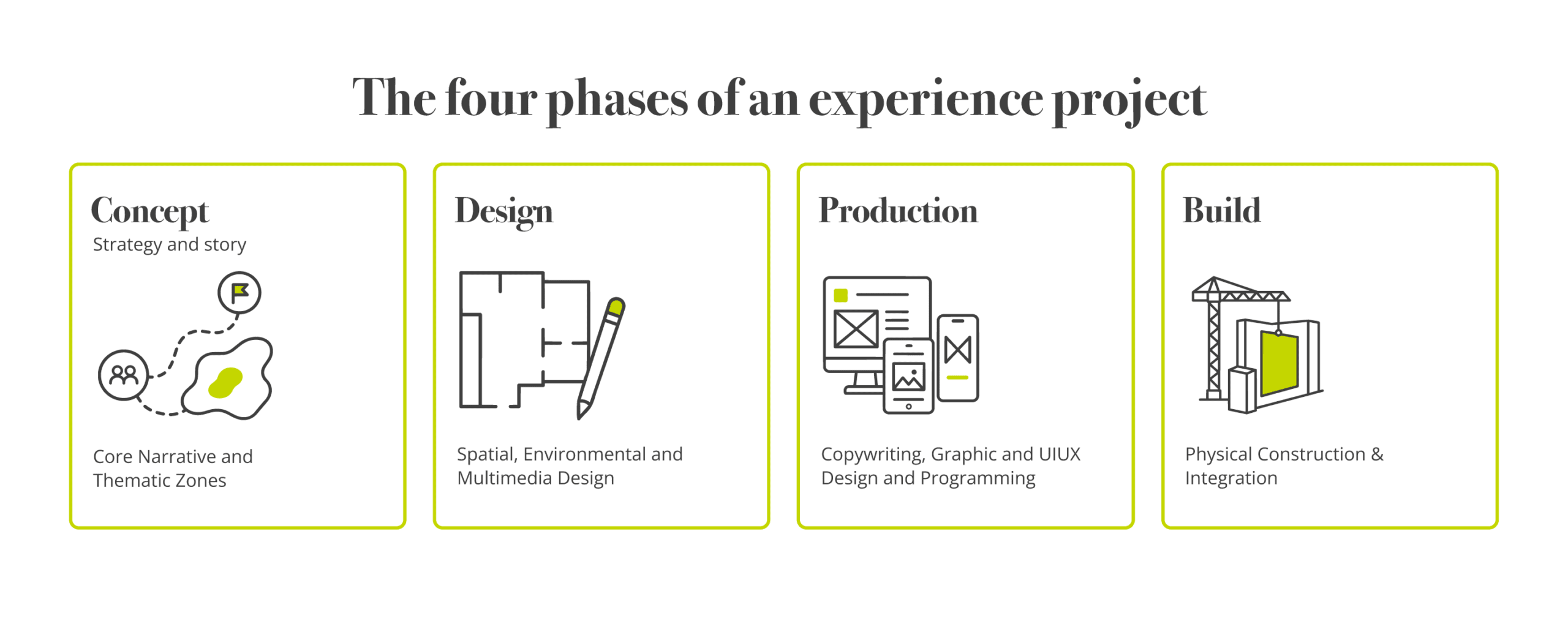
The four phases of an experience project
Every tender, however it is structured, has to commission four phases of work. It helps to be clear about them first, because these four are what your tender is really procuring.
Concept (strategy and story). The blueprint that guides everything else. The core narrative, thematic zones, conceptual floorplan and storytelling methods all sit at this stage.
Design. The translation of strategy into a visual and aesthetic experience. Spatial, lighting, acoustic and multimedia design all live here.
Production. Where the informational and visual content is created. Copywriting, video, prototyping, programming, interactive build.
Build. Where fabricators physically construct the space.
The question for your tender is whether you commission these four together, in two stages, or in three.
Option 1: the all-in-one call
One tender covering concept, design, production and build. Usually a fabricator-led consortium bids as a single team, with one project manager as your point of contact.
What works. You release one call, save procurement time, and keep project management simple. The same team stays involved from start to finish, which can produce a more unified vision when the team is genuinely well-matched.
What to watch. Variation orders. With concept, design and build bundled into one tender, the build is priced before the creative thinking is complete. As the concept develops during the project, scope changes get requested, and those changes become variation orders priced by the same vendor.
Specialist talent is also harder to reach this way. The consultancies that often produce the most distinctive thinking are usually not willing to lead such a consortium. The build accounts for the largest share of the budget, and only a fabricator tends to be willing to carry that exposure.
When this structure suits you. Smaller-scale projects with clear scope. Projects where speed matters more than upstream creative range.
Option 2: the two-stage call
Stage 1 covers concept and design. Stage 2 covers production and build. One lead consultant for stage 1, a separate lead contractor for stage 2.
What works. You gain better control of project cost. Because the creative thinking is completed and approved before the production and build call goes out, you can be very specific about what the second tender is buying. That specificity is what prevents large variation orders later.
You also widen the pool of strategy and creative talent. Specialist consultancies can bid for stage 1 without needing to attach themselves to a fabricator. The quality of the concept tends to rise, because the thinking is not constrained by production economics while it is still taking shape.
The stage 1 scope can also include design guardianship and project management, so the strategic consultant stays on through the build to protect the vision. They become the interpreter between you and the fabricator, and the check that keeps the build from over-engineering or under-delivering against the original intent.
What to watch. The fabricator and production company joining at stage 2 will not carry the same depth of context as the team that developed the concept. A strong consultant in the design guardian role is what bridges that gap. Without the bridge, nuance can be lost in translation.
When this structure suits you. Most museum, gallery and major exhibition projects, where the upstream thinking carries real weight and needs to be protected through the build.
Option 3: a separate call for each stage
Three tenders. One for concept, one for design, and one for production and build.
What works. You reach the best specialist talent available at every stage, without consortium constraints. Competition rises at each call, which can produce more competitive pricing.
What to watch. Time and project management load. Three tenders take longer to put out and assess. The risk of miscommunication between three independently appointed parties is higher too, unless the consultant who developed the concept is retained to carry it through. This structure also asks more of your internal project team.
When this structure suits you. Large, complex destinations, attractions and precincts that genuinely benefit from specialist expertise at every stage, and where the timeline allows for it. These also tend to be projects where the in-house team is large enough to coordinate several vendors in parallel.
Which structure tends to serve most projects
Of the three, the two-stage call tends to serve the widest range of projects.
The reasons are practical. It keeps meaningful control of project cost. It widens the pool of strategy and creative thinkers who can bid for the upstream work. It includes the design guardianship that protects the vision through the build. And it reduces the variation-order risk that catches many all-in-one buyers later.
That said, there are good reasons to choose any of the three. The right structure for a given project depends on its scale, the maturity of your internal project management, and the time and budget available. What matters more than which structure you choose is choosing it deliberately, before the tender is drafted.
Before drafting the tender
Whichever structure you are leaning toward, three questions are worth answering first:
- What do we want the experience to communicate, make visitors feel, and motivate them to do?
- Do we have a clear picture of what it takes to deliver this experience, from concept through opening? And given that process, do we have the in-house bandwidth to coordinate it?
- What is our variation-order tolerance? How much room do we have if scope expands during the build?
If your answers point in different directions, that itself is useful to know. It usually means the structure deserves a longer conversation with someone who has run this kind of procurement before.
A final thought
The structure you choose is not a small administrative step at the front of the project. It is the frame that gives the work room to become what you intended, and it quietly shapes every decision that follows.
Chosen well, with a clear view of your project’s scale, your team’s capacity, and the time you have, it becomes one of the quiet advantages that carries the work all the way through to opening.
This article is one of six drawn from a downloadable guide HOL has put together for teams tasked with delivering a museum, gallery, or major exhibition. To request a copy, please email info@hol.sg.