
An institution’s brief to design a museum, gallery or exhibition is never just a brief. It is an attempt to give shape to years of knowledge, responsibility, achievement, and future ambition, within a space visitors may only spend an hour or less in. The material can range from marine science to genomic research to an airport terminal’s engineering story.
Presenting what the institution already knows is the easier part of the job. The harder part, and the part clients often struggle to put into words when they first come to us, is this: the experience needs to turn a visitor into someone who understands, and ideally, into someone who supports and advocates for the institution long after they’ve left.
Somewhere in that process, you will likely hear a piece of advice that sounds reasonable: if the content is too complex, cut it down. Simplify.
Take that advice with double pinches of salt. Cutting content is not the same as simplifying it, and reaching for the cut is often a shortcut that skips the actual work you are paying a strategist to do. The real job is to extract the essence of the complexity and find the most seamless way to allow a visitor to understand why it matters. That is a harder, slower kind of work. It is also the work that determines whether your exhibition changes minds or just fills a room.
Here is what that work actually looks like.
Step 1: Start with the Audience, Not the Content
Most teams open a project by asking, “What do you want to say?” It is a natural place to start, and it produces a content inventory: facts, milestones, statistics, artefacts. All useful, and all still institution-facing. But it rarely holds up against the reality of a visitor with twenty minutes and no prior context.
The more useful question is: what does the audience already know, want to know, need to know, feel and do? That shift, from “what we want to say” to “what the visitor needs,” changes everything downstream, from what gets included to how it gets told.
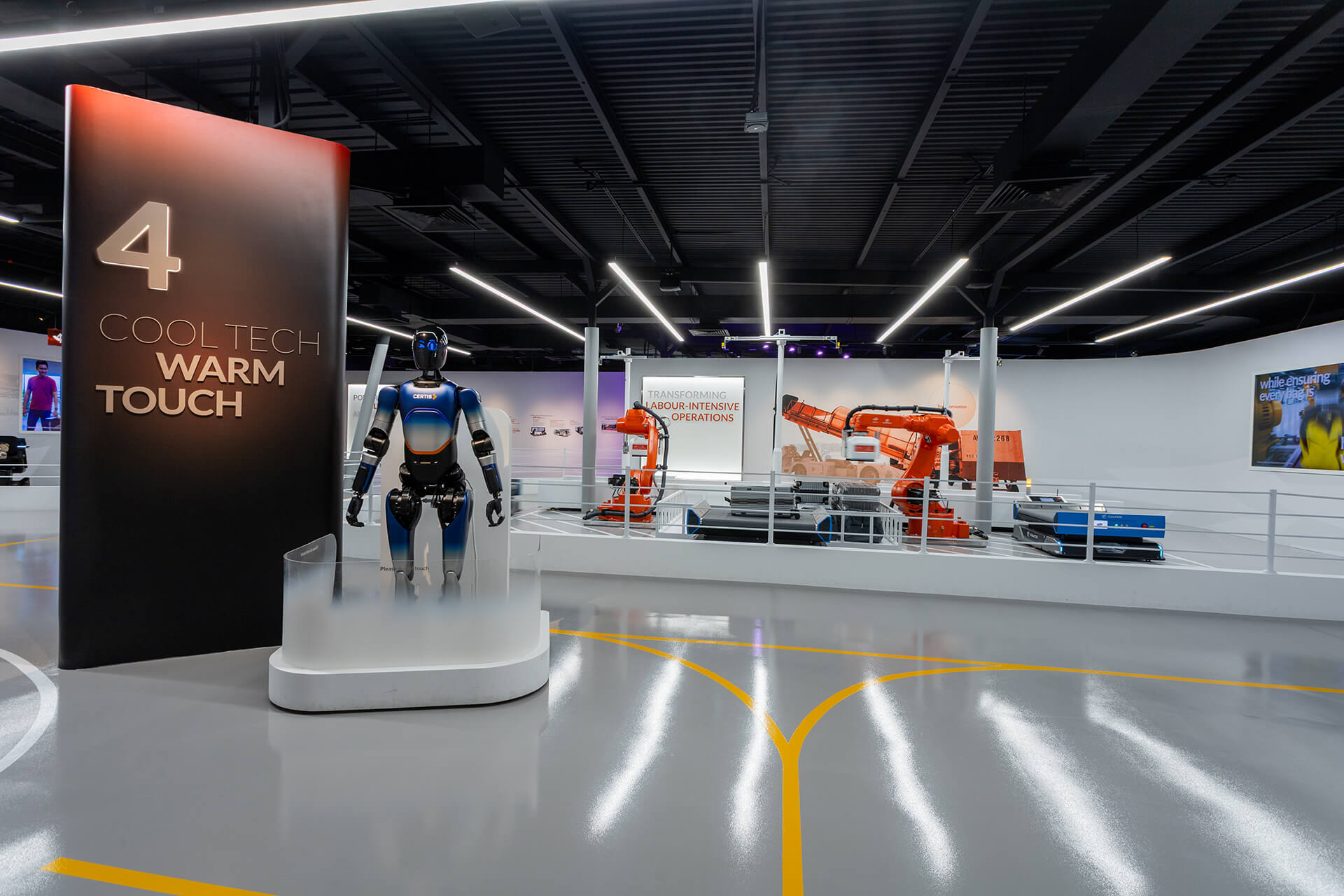
During the conceptualisation of our T5 in the Making exhibition, it would have been easy to centre the story on the scale and beauty of the terminal. Our research and social listening told us otherwise: Singaporeans also wanted to know how T5 would benefit them. So, the narrative expanded to include how T5 responds to an ageing population and climate change, against a backdrop of rising travel demand.
If your consultants cannot tell you, in one sentence, what a visitor should walk away understanding, feeling and doing, that is worth stopping to ask about before content decisions get made.
Step 2: Create a Soft Landing
When faced with complex content, the easy move is to reduce how much of it there is. This is precisely the shortcut we’d urge you to watch for. Cutting content down does not make it any easier for a visitor to understand, let alone appreciate or relate to. It just as often strips away the very nuance your institution spent years earning.
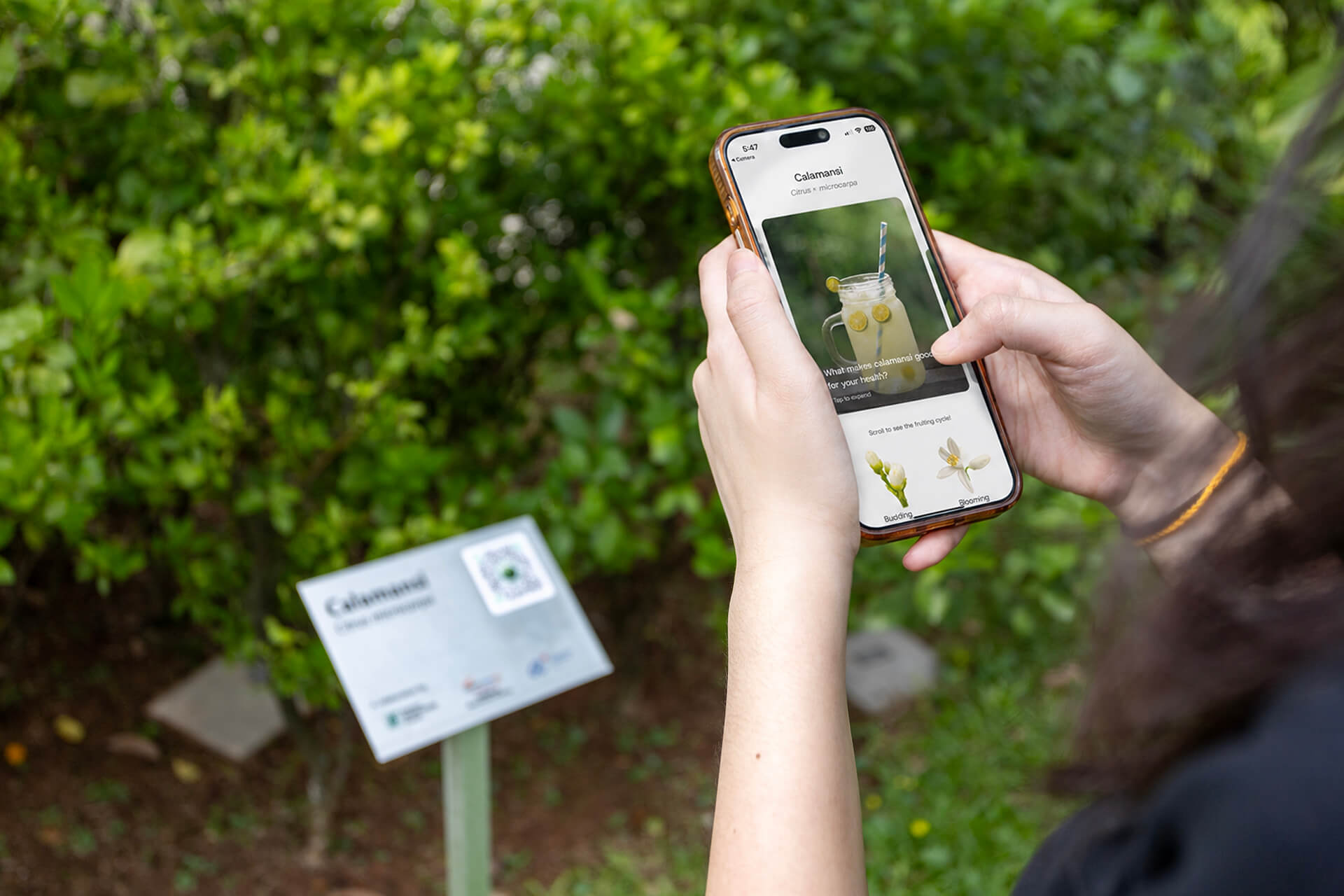
So what does the real work look like instead? In our SGH Genomic Garden digital experience, the brief was for visitors to learn about the genomics of ten regional plants. Real science, not “dumb-down”, for a lay audience. Our solution: visitors first meet the plant through a sensory prompt. The next layer poses a relatable question, such as “what makes calamansi taste so refreshing?” Only then does the deeper scientific research get introduced. We call this creating a soft landing. The more complex the content, the softer the landing needs to be before that complexity arrives.
Step 3: Choose the Right Modality
Once a soft landing is in place, the next question is how the content should actually be delivered. Not every piece of content belongs on a text panel or needs an interactive screen. Not every complex subject is improved by adding more media.
The right choice depends on the context, the visitor profile, and what kind of information the visitor actually needs to process. The most elaborate option is rarely the right one. More often, it is whichever choice gets the visitor to the story fastest and with the least friction. A well-placed interactive can turn passive viewing into active understanding; an unnecessary one is just cost and upkeep dressed up as innovation.
One Story, Many Depths
A strong exhibition holds one core story, even as visitors move through it unevenly. Some skim. Some read every label. Some are drawn to objects rather than text. Some have eight minutes before their next meeting. Holding all of this together, without the experience fragmenting into unrelated pieces, is where a lot of otherwise good exhibitions come apart.
We build for this using what we call tiered storytelling: the experience is structured in layers, so different visitors can go as deep as they want without anyone feeling shut out. The first layer delivers the main idea quickly, through a headline, a spatial gesture, a key visual, or one short line. The second layer offers supporting detail through objects, graphics or short interactions. The third layer rewards visitors who want to stay longer, through extended content, digital layers or archival material.
These are not three separate stories. They are the same story, told at three depths. Built this way, an experience tends to avoid the two failures a visitor notices fastest: overwhelming them the moment they walk in, or thinning the experience out until there is nothing left for the visitor who actually wants to go deep.
What This Means for You
The next time someone tells you the fix for complex content is to cut it down, treat that as a signal, not a solution. It usually means the harder work, understanding your audience, building a soft landing, choosing the right modality, layering the story, hasn’t been done yet.
Three questions worth asking any consultancy you’re evaluating or currently working with:
- What should our visitor understand, feel and do by the end of the experience?
- Can you show me how you plan to interpret a piece of complex content?
- Can you share more on why you chose this format (panel text, digital, interactive) to do so?
Presenting complex knowledge to a broad audience was never about making an institution’s expertise smaller. It is about doing the work to find the essence, building the access points, and choosing the right way to deliver it, so a visitor leaves having understood something real. Not having been talked down to, and not left to figure it out alone.