
Personalisation has moved quickly from novelty to expectation.
Visitors encounter adaptive recommendations, responsive content, and tailored pathways across daily life. So it is natural for museums, attractions and public engagement spaces to ask a similar question: how much personalisation is useful?
This is where it gets tricky. In public experiences, personalisation can increase relevance, but it can also create fragmentation. At HOL, we believe the goal is not maximum personalisation, but appropriate adaptation.
That difference matters.
In digital products, personalisation is often optimised for individual efficiency or conversion. In public and cultural experiences, the job is different. These experiences carry collective meaning. They shape memory, identity, and the conversations people have after they leave. So the outcome we are designing for is not that the system “knows” the visitor. The outcome is that the visitor feels a sense of ownership in the experience, while still participating in something shared.
When personalisation goes wrong in public experiences
When personalisation is applied too aggressively, the experience can start to feel uncomfortable in ways that are easy to miss during development. Visitors may feel watched rather than supported. They may feel isolated because everyone around them appears to be having a different experience. Or they may feel unsure of what the experience is ultimately trying to say.
In other words, the system may become technically adaptive while the experience becomes socially fragmented.
That is why the most important question is not what the technology can do. It is what the experience must hold together.
The better design target: adaptive, not invasive
A strong adaptive experience supports diverse audiences to enter the same story. It helps without overreaching. It offers options without forcing participation. It creates relevance without collapsing the shared frame.
In practice, this means designing around human needs before designing around personalisation. Needs are where audience variation shows up most clearly, and where adaptation is most defensible.
- Clarity: language, prior knowledge, reading confidence
- Agency: family vs solo, available time, preferred pace, choice of depth
- Comfort: accessibility needs, sensory load, emotional readiness for heavier themes
- Resonance: the need to feel your time was worthwhile, and to connect meaningfully with what you encountered
When personalisation ignores these needs and instead chases technical capability, it creates friction. And friction in public experiences is not just a usability issue. It is a meaning issue.
Preserve the shared spine
One of the most important safeguards in adaptive experience design is maintaining a shared narrative spine.
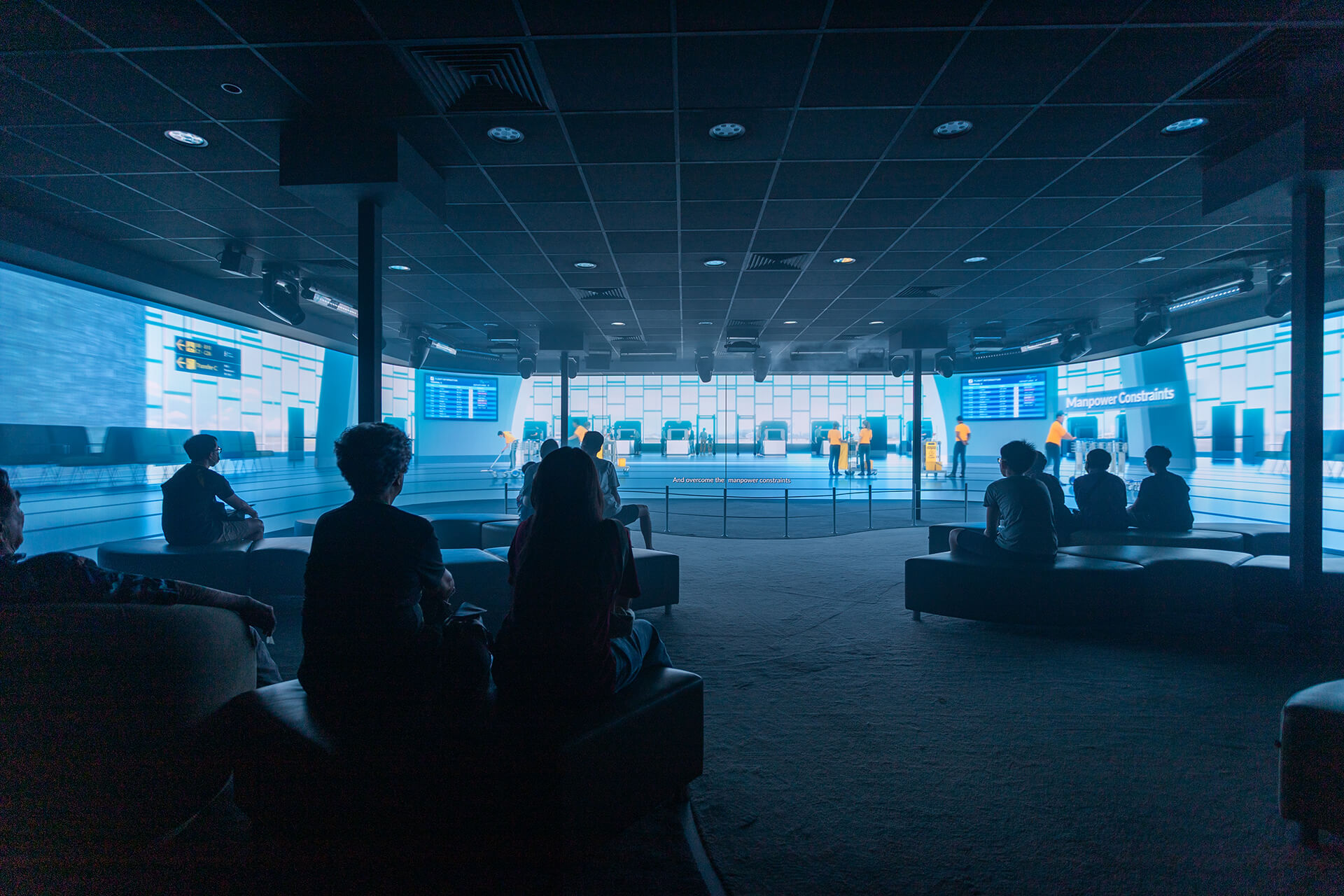
Not every visitor needs the same pathway, the same depth, or the same interaction mode. But they should still be able to leave with a recognisable common story, a shared reference point, and the sense that they participated in the same larger experience.
This becomes especially important for national narratives, public exhibitions, heritage and cultural institutions, or destination experiences where collective memory matters.
Adaptation should create multiple doors into the story, not separate buildings.
Where adaptive design is genuinely helpful
Adaptive design becomes powerful when it supports real variation, rather than perform novelty.
Sometimes that variation is practical: language preferences, accessibility needs, or visiting modes. Sometimes it is cognitive: different prior knowledge levels or reading confidence. Sometimes it is situational: visitors with limited time versus visitors who want depth.
The best implementations do not rely on heavy profiling. They tend to be quieter. They use layered interpretation, optional depth, and flexible routes into understanding.
Visitors feel guided, not analysed.
This is also where many teams misdiagnose the brief. They assume the solution is “personalisation”, when the real solution is simply better design of choice, pacing, and legibility.
A personalisation ladder for commissioning teams
Not every project needs advanced AI-enabled adaptation. A useful way to scope the right level is to think in tiers, not as a technology wishlist, but as a governance and experience question: what stays legible, maintainable, and fair across audiences?
- Level 1: Choice-based adaptation: Visitors choose format, language, or depth. This is often the highest value-to-risk ratio, because it is explicit and easy to understand.
- Level 2: Context-aware adaptation: The experience responds to location, sequence, or time spent. This improves pacing and flow while still staying predictable.
- Level 3: Responsive adaptation: Content shifts based on visitor inputs in-session. This can deepen engagement, but requires tighter UX and content governance to avoid confusion.
- Level 4: AI-enabled adaptive interpretation: Systems dynamically tailor responses or pathways. High potential, but also the highest demands for QA, safety, and trust, and the highest risk of narrative drift.
Many teams jump to Level 4 when Level 1 or 2 would serve the audience better. The better move is not choosing the most advanced level but choosing the most appropriate one.
Why this matters for museums, galleries and destination attractions
Museums, galleries and destination attractions are under pressure to serve broader audiences while maintaining throughput, quality, and consistency. Adaptive experiences can help, but only when they are treated as part of an experience strategy, not added as a technology layer after the fact.
At HOL, we see personalisation as a strategic design question: what should adapt, what should remain shared, and how do we preserve meaning across difference?
Personalisation should increase relevance, not distance
The future of experience design is not simply “more personalised”. It is being more intelligent about when adaptation is useful, and when it starts to undermine the shared experience.
When done well, adaptive experiences help more people feel welcomed into the same story. When done poorly, they create parallel experiences that reduce shared meaning.
The goal is not to make every visitor feel individually targeted. It is to help more visitors feel that the experience was made with people like them in mind, while still belonging to something bigger than themselves.
That is personalisation without alienation.