
In many exhibitions and public experiences today, digital features have become a familiar presence – from interactive screens and projections to QR-enabled trails and mobile-based content layers.
Across projects, the HOL team has observed a recurring pattern: these digital features often enter the conversation too late.
By the time they’re discussed, the physical space is already planned, screens are already specified, and there’s a ready-made list of “interactive ideas.” At that point, the digital layer is no longer a genuine design decision. It becomes something to fit in around everything else. And that difference fundamentally changes the role it plays.
What we’ve found, time and again, is that the most effective digital experiences are not necessarily the most attention-grabbing. Instead, they work in quiet alignment with the physical space – guiding visitors to notice more, understand more, and form a stronger connection with what they are experiencing.
At HOL, we think of digital touchpoints as an almost invisible layer of interpretive support. Not more screens or interactions for their own sake, but a way to help visitors better grasp the story embedded within the space – reinforcing meaning without competing for attention.
Beyond the Interface: Designing for Real-World Experience
Digital experiences in these spaces do not exist in isolation.
They sit within real-world conditions that shape how people engage:
- Spatial flow (where people stop, bottleneck, or drift)
- Audience composition (families, seniors, tourists, school groups, repeat visitors)
- Dwell time (seconds versus minutes)
- Emotional state (curious, tired, overwhelmed, reflective, task-focused)
- Social behaviour (solo, paired, or group-based interactions)
This is why something that works beautifully in one venue can fall flat in another. Good digital design in these contexts is not just about creating polished interfaces. It is about ensuring that visitors leave with a clear understanding and a meaningful takeaway, rather than a fleeting interaction that is quickly forgotten.
Example 1: Designing for a non-linear digital trail experience
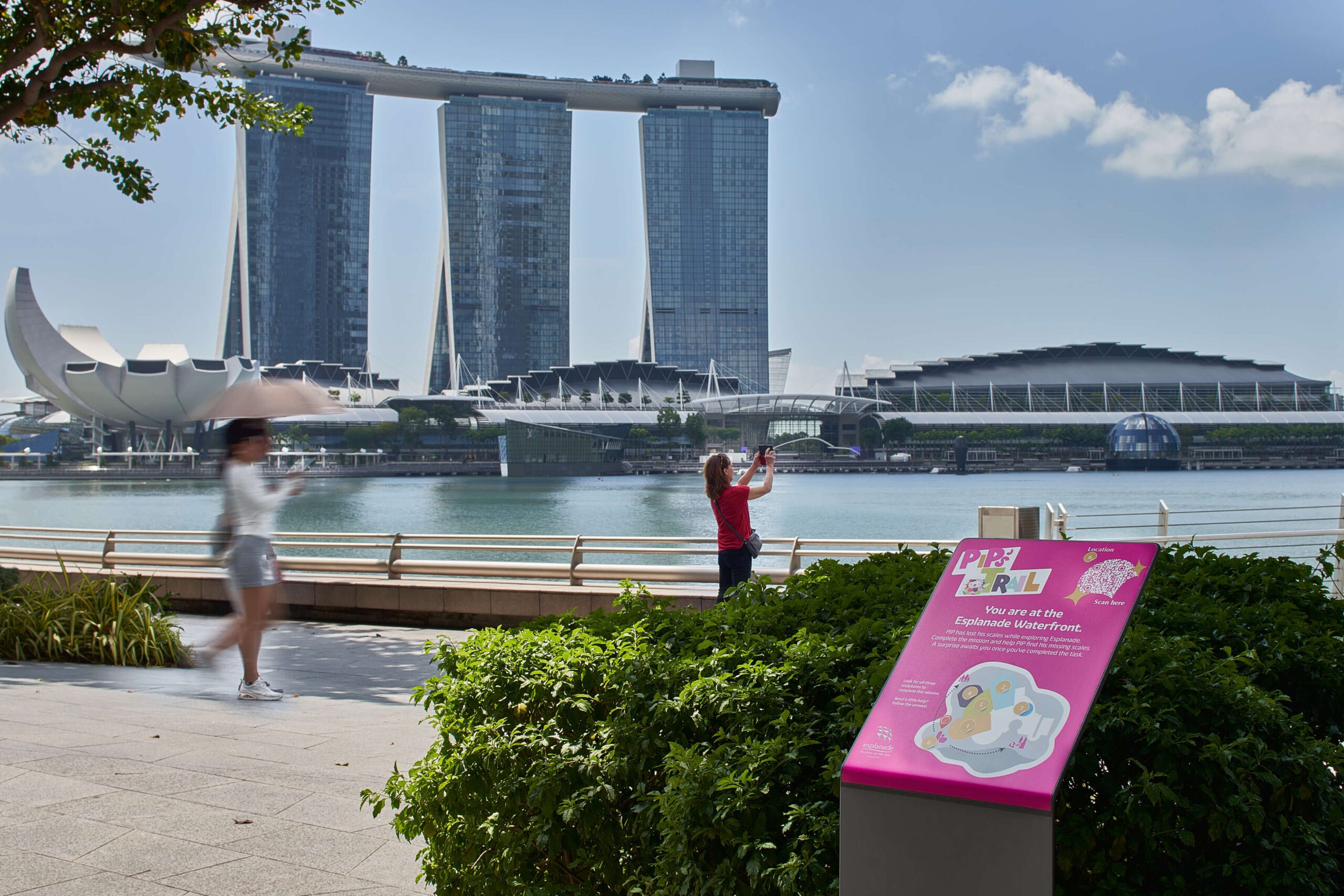
In many heritage and visitor environments, such as Esplanade – Theatres on the Bay, visitors do not move in a neat, prescribed order. They enter from different points, pause unevenly, and absorb content in fragments.
If the digital layer assumes a linear journey, it may create confusion: visitors encounter content out of sequence, key messages feel disconnected, and engagement drops because the experience requires too much cognitive effort. The design challenge is not just “how to make content interactive.” It is how to make the message legible even when the journey is non-linear.
This requires clear narrative pillars that can stand independently, subtle orientation cues, modular content architecture, and interfaces that support re-entry without penalty. In other words, the digital layer must carry the complexity, so the visitor experience feels natural.
Example 2: Digital enhancement that supports the physical setting
In environments where the audience already carries emotional weight – such as a healthcare-adjacent setting – digital interventions require restraint. The role of the digital layer is not to dominate attention. It is to invite participation.
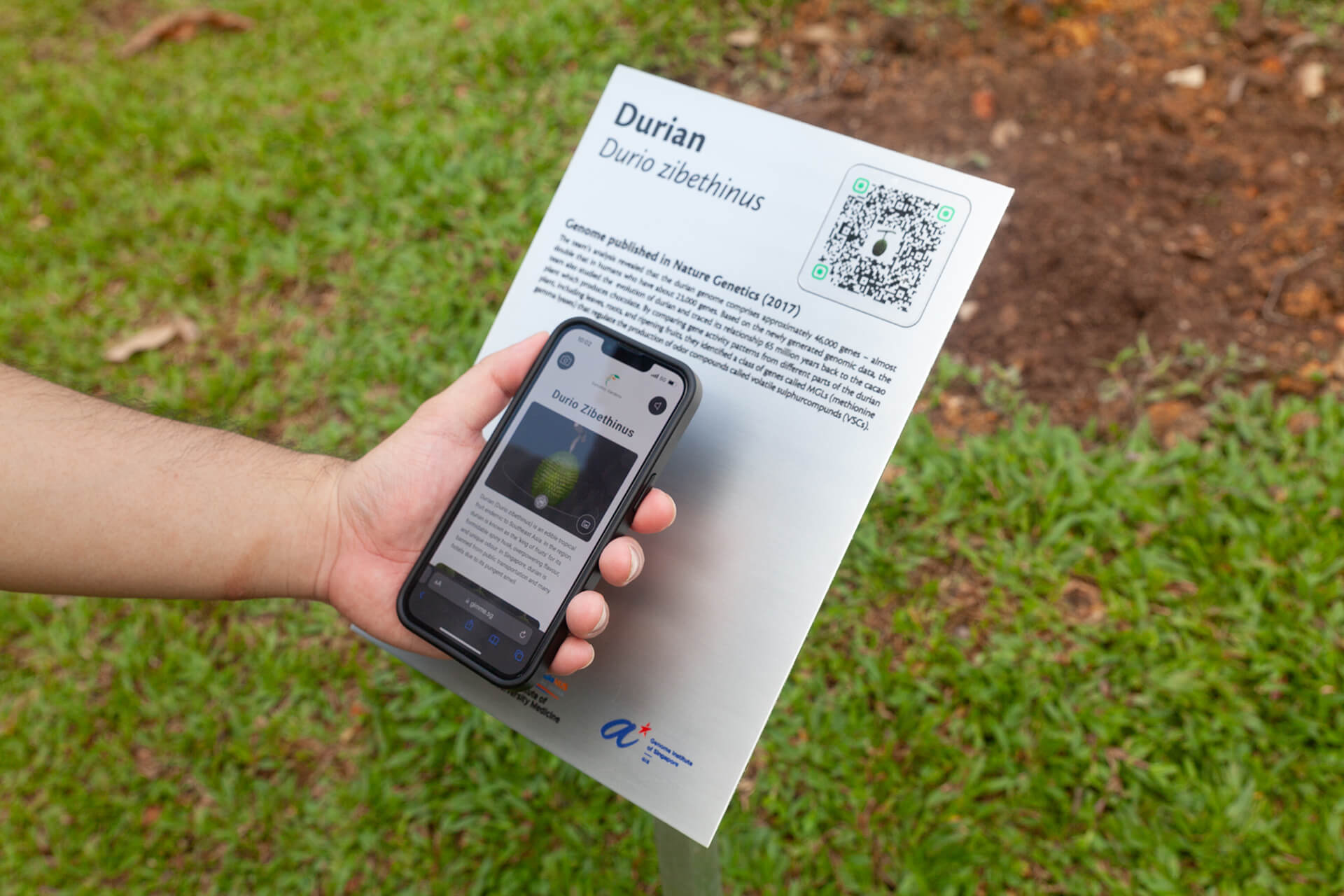
This can mean:
- helping visitors understand what they are seeing,
- connecting scientific information to human meaning,
- and making the content accessible without increasing stress or cognitive load.
The most effective digital experiences in such settings are often the least performative. They are calm. Legible. Purposeful. They create clarity without distracting visitors with overly high-tech or attention-demanding interventions.
Evaluating success beyond usage metrics
One of the most common pitfalls in digital experience design is over-reliance on usage metrics. Scans, taps, downloads, and completion rates are useful indicators, but they don’t tell the full story.
For public engagement spaces, more meaningful measures often include:
- understanding (did the message land?)
- emotional resonance (did the visitors care?)
- advocacy (did they share, recommend, or return?)
- quality of recall (what do they remember later?)
- behavioural intent (did it shift perspective or prompt action?)
This matters especially for institutions accountable for educational, civic, or cultural outcomes that aim to shape perspectives and build lasting connection, not just increase footfall.
At HOL, we’ve found that how well a digital layer works is often decided long before it goes live – at the point when it first enters the conversation.
When introduced too late, it becomes an addition, something fitted around decisions that have already been made.
But when considered from the start, it becomes part of how the experience is shaped. It works with the space to deepen engagement with its story, guiding what visitors notice, understand, and carry with them.
And in doing so, it helps transform a visit into something that is remembered, not just experienced in the moment, but carried with them long after they’ve left.