
If you have recently been tasked with delivering a museum, gallery, or major exhibition, you have likely already done the work of setting objectives: the milestones, the history, the brand story, the achievements the institution wants visitors to recognise. These tend to be well established before any consultancy is engaged.
The harder question is whether the finished experience will actually achieve those objectives. A museum or gallery can be thoroughly researched and beautifully built, and still leave most visitors with little of what the institution hoped they would take away.
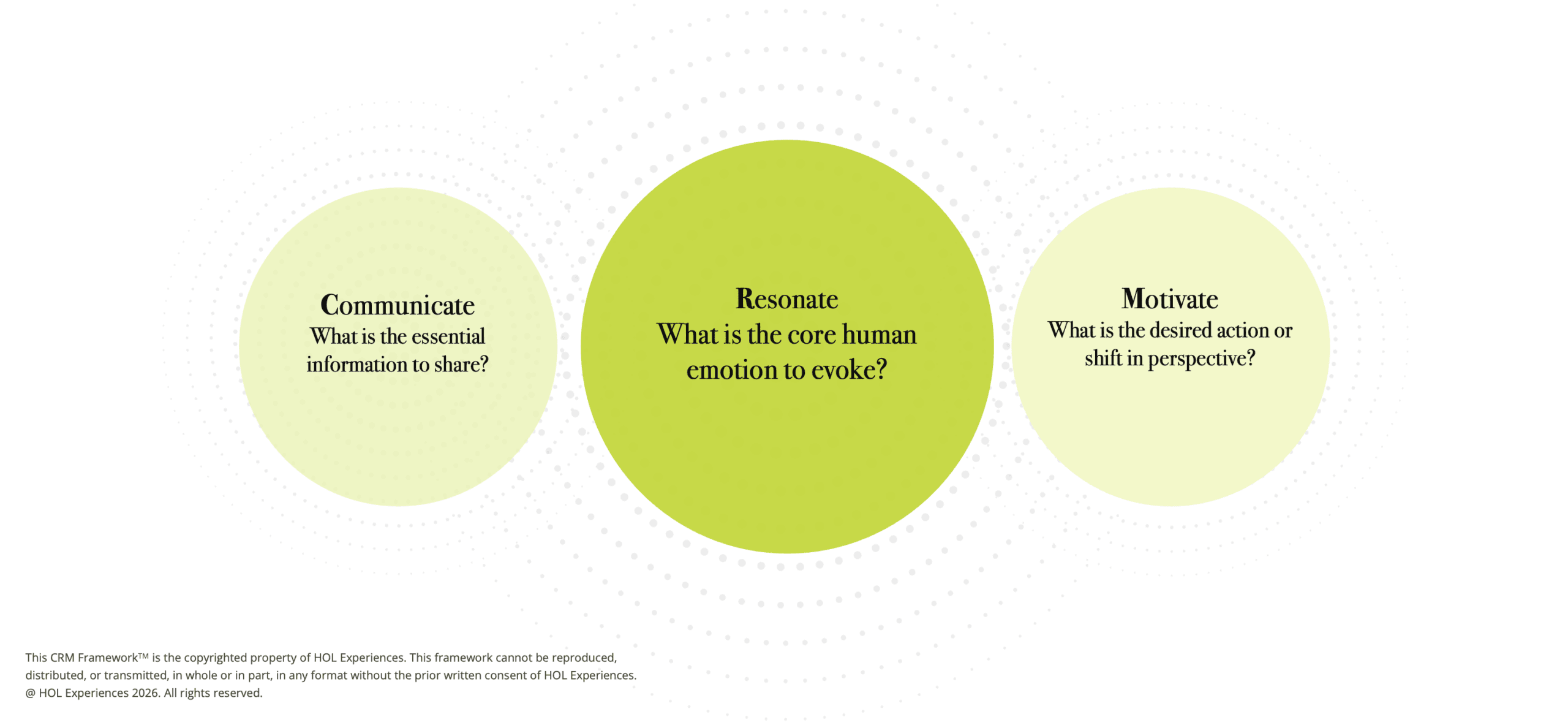
C: Communicate
The starting point is always the institution’s objectives and what it wants visitors to understand. These tend to be fact-based and achievement-oriented, and rightly so.
There is rarely a shortage of material. The history, the milestones, the brand story: all of it is worth telling. The challenge is that visitors arrive with limited time and finite attention.
The discipline of communication, at this stage, is not about gathering more information. It is about deciding what truly matters. From everything the institution has to say, what will a visitor actually care about? What, from the full weight of the brand story, the milestones, the history, can be carried into the experience in a form that reaches the people it is meant for?
The lower the cognitive load on the visitor, the more they will engage. This is not about simplifying what needs to be said. It is about making what is true and important accessible enough to land.
R: Resonate
Corporate objectives tend to be “hard”. They are about facts, achievements, milestones. Facts inform. They are rarely, on their own, what moves people.
What moves people is not information but the feeling that information produces. The work at this stage is identifying the emotions that the institution’s story should naturally evoke. These emotions tend to be universal: pride, curiosity, wonder, empathy, a sense of connection to something larger than oneself.
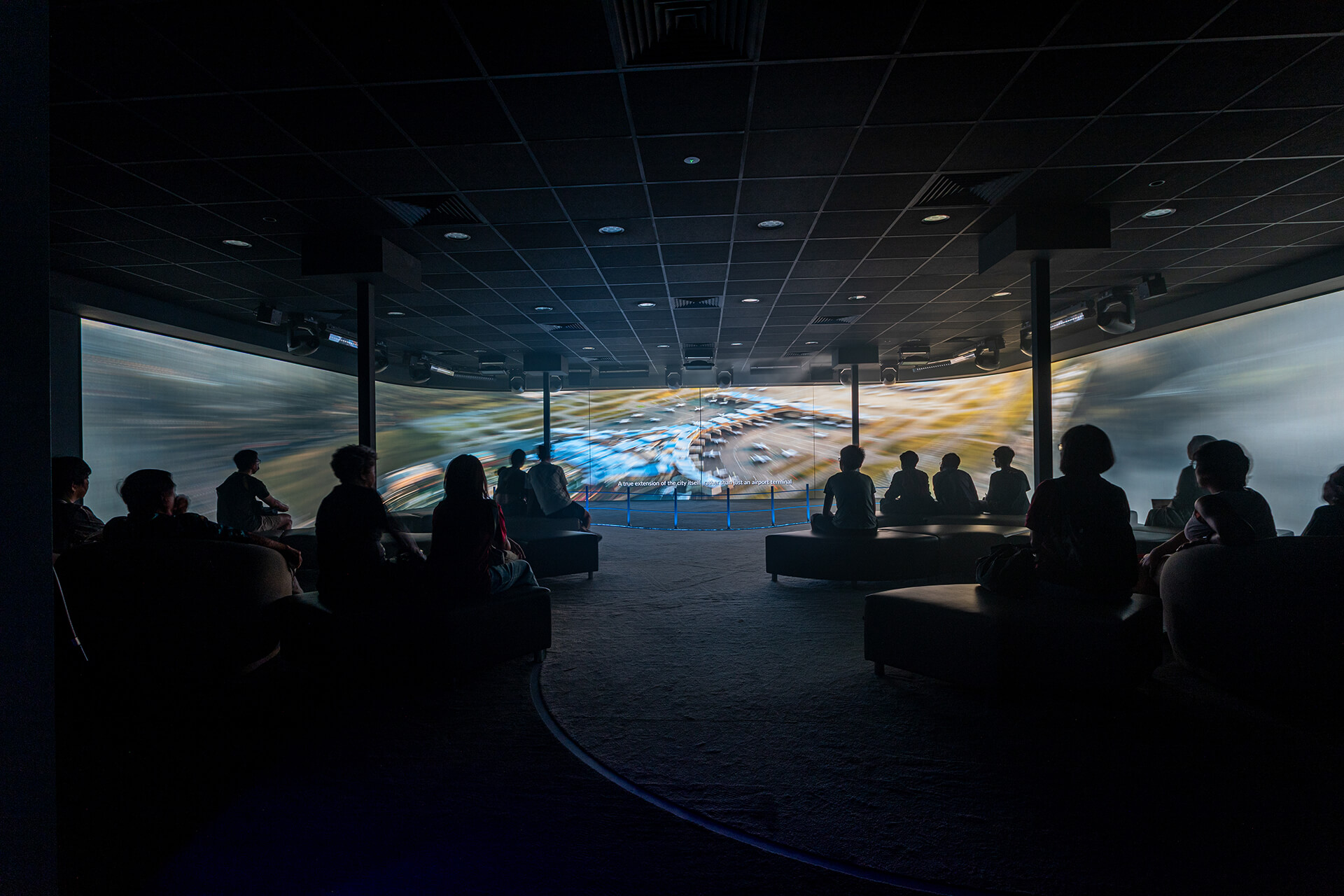
The important distinction is that emotional resonance is not manufactured. The sequencing of what visitors encounter, the pacing of the journey, the moments built in for something to settle before the next thing arrives: all of this is shaped with intention. When it works, none of this planning is visible to the visitor. What the visitors feel seems to come entirely from within them.
An experience that communicates well but does not resonate produces visitors who engaged in the moment and have largely forgotten it by the time they leave. The facts were accurate. The presentation was considered. But nothing moved.
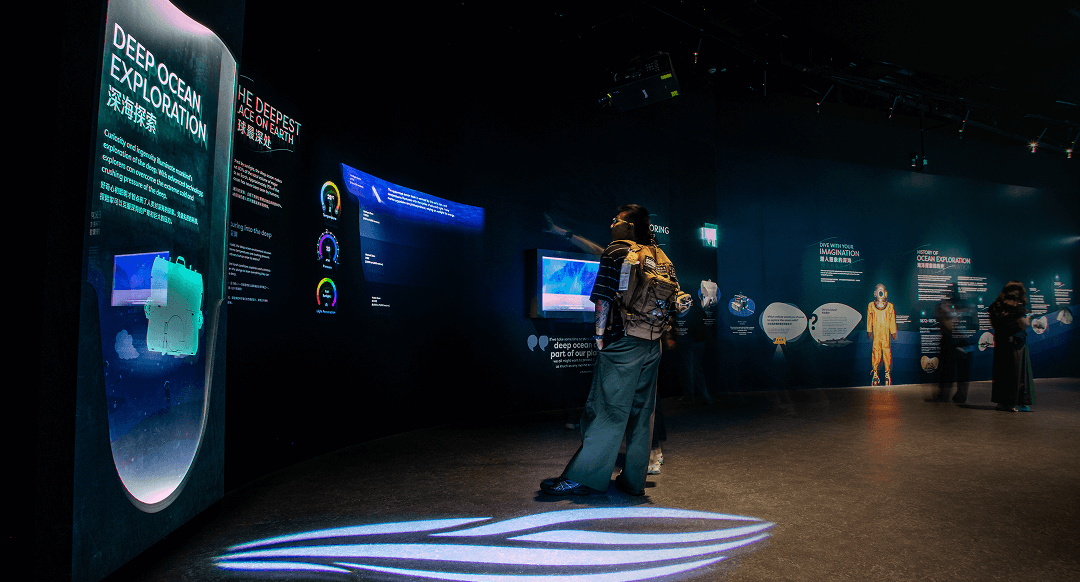
M: Motivate
The aspirations for what visitors should feel after the experience are also usually clear: to trust the brand more, to love what the institution stands for, to be proud of what has been built. These are meaningful goals, and they are worth holding onto.
The work at this stage is to find the path that actually leads there. “Love our brand more” describes the destination. What it does not yet describe is the first step a visitor might take, or the conditions that would allow them to take it.
It helps to start with a simple question. What is the one thing a visitor might come to see differently, that could in time grow into the outcome the institution is working toward?
What people are told, they tend to forget. What they work out for themselves, they tend to keep. An experience built on that difference leaves visitors with more than agreement in the moment. It leaves them with something they still hold when someone asks them about it months later. That is the outcome worth building for.
Why all three have to be present
In practice, most institutions arrive at this work with a reasonably clear sense of C and M. They know what they want to communicate, and they have a strong aspiration for what they want visitors to walk away with. What tends to be harder to define, and where the most important thinking happens, is R.
Resonate is the bridge. It is what allows the message to land rather than pass through, and what gives the motivation something real to grow from. Without it, the other two are present but disconnected from each other.
An experience that tries to motivate without first earning resonance feels like a lecture. Visitors sense they are being pushed toward a conclusion before they have been given reason to arrive there themselves.
An experience that resonates emotionally but has not defined what it wants to motivate produces visitors who were moved but have nowhere to take that feeling. The emotion dissipates without a direction.
And an experience that communicates clearly but has not worked through resonance and motivation produces precisely what most experiences produce: visitors who took in the information and then went back to their lives unchanged.
Getting all three right is what gives the Core Narrative its authority.
Where this thinking lives
This work happens at the very beginning of a project, before any decisions about design, space, or content are made. What it produces is the Core Narrative: the governing document that defines what the experience will say, how it will make visitors feel, and what it will leave them with. Every subsequent decision, creative, spatial, or content, is measured against it.
The Core Narrative does something beyond guiding the creative team. Once it has been endorsed by senior leadership, it becomes a shared foundation for every conversation that follows. What might otherwise become subjective now has a clear answer. It is as useful for managing upwards as it is for holding the project together downstream.
The Core Narrative is the first of three documents a well-structured project needs. The other two build on it. What the Core Narrative gives a project is a foundation that every decision stands on. Get it right at the start, and everything that follows has something solid to hold to. It is quiet work, and easy to move past when a project is in a hurry to begin. It is also the work that decides whether the vision leadership endorsed at the start becomes the experience visitors actually have.
This article is one of six drawn from a downloadable guide HOL has put together for teams tasked with delivering a museum, gallery, or major exhibition. To request a copy, please email info@hol.sg.