
The short answer: An exhibition works for the general public when it gives visitors something worth talking about, lets people take part without prior knowledge, and provides the seating, rest points and access that help groups stay long enough for the story to reach them. Many visitors to free exhibitions come primarily to spend time together. Footfall alone cannot show whether the visit worked. Useful additional signals include conversations about the exhibits, what visitors remember and what they want to tell others.
For Project Directors, these decisions belong in the brief before design begins: define who “general public” means, create more ways into the subject while preserving its depth, and agree how success will be assessed beyond attendance. These principles draw on HOL Experiences’ work across public projects in Singapore, including the SGH Bicentennial Genomic Garden digital trail and the Singapore Chinese Cultural Centre’s Zhong Yuan Festival experience.
Spend a full day standing in a free public exhibition, and you will notice something that does not appear in most reports. A family walks in. They are not quite sure whether they have entered the gallery or are still in the corridor. One of them reads the first panel. The others drift. Someone checks a phone. A minute later, they have crossed the room, glanced at three things and moved on.
They are not the exception. In a free public exhibition, visitors like these can make up a large share of the visitorship and a substantial part of the footfall. Yet they are, more often than not, the audience the content was least written for. In most briefs, they are filed under the general public. At HOL, we have taken to calling many of them social visitors, because the term tells us something more useful about why they are there. Their primary reason for visiting is social rather than subject-led.
They came to spend time with someone. A parent with children during the school holidays. Two friends filling an afternoon. A couple on an early date. Someone showing a visiting relative around the city. Colleagues stretching a lunch break. Three generations out together because it was free and happened to be on the way to lunch.
They are not resistant to the subject matter. They just did not come for it. For anyone commissioning a public exhibition, this creates an important question: if a large share of your visitors did not arrive because they were interested in the subject, what does a successful visit look like for them, and how should the exhibition brief account for that from the start?
Why Footfall Does Not Tell You Whether an Exhibition Worked
When an exhibition is free, no one has paid to stay. A ticketed visitor who is bored may still finish the exhibition because the money has already been spent. A visitor at a free exhibition can leave at any moment and lose very little. This makes free public exhibitions one of the most honest environments we work in. Nobody has to be polite. If they walk, we have our answer.
Footfall tells us that someone entered the exhibition. It does not tell us whether the visit worked. It does not tell us whether they understood anything, enjoyed being there, spoke about what they saw, stayed for three minutes or thirty, or left with any reason to return.
Across the public exhibitions we have worked on, we repeatedly encounter another complication: many visitors did not arrive because of the subject matter at all. They may have entered because the exhibition was free, convenient, air-conditioned, near another attraction, or simply something the group could do together. That does not make them less valuable visitors. It simply means the exhibition has to work harder to give them a reason to stay.
What Does a Successful Visit Look Like for the General Public?
When organisations go beyond footfall, the next measure they often reach for is comprehension: did visitors understand what we put in front of them? That matters, but a social visitor may be asking a different set of questions. Did we have a good time together? Did we feel at ease here? Did we find something worth talking about? Did we leave with one thing worth telling someone about?
These are not lesser outcomes. For many social visitors, they determine whether the experience was worthwhile and whether it will be remembered. Designing for this audience is also not the same as simplifying everything. The depth, scholarship and research should still be there. The challenge is to create more than one way into the subject.
Three principles have become particularly useful in our work.
1. Give Visitors Something Worth Talking About
Observe a room full of social visitors and one of the most reliable things that happens is this: one person turns to another and says, “Look at this.” We pay close attention to that moment. Content begins to travel through a group when it gives someone something to pass on: a surprising detail, a comparison with their own life, a question they can answer, or an opinion they can hold and perhaps cheerfully disagree about.
At that point, the exhibition is no longer communicating only between institution and visitor. The visitors have started communicating with one another. This is also why the first layer of an exhibition needs to be complete on its own. Someone should be able to leave after four or five minutes with one worthwhile idea, while another visitor should be able to stay for an hour and find considerably more. Both can be successful visits.
A short visit is easily interpreted as a failed one, but people leave for many reasons. They have a lunch reservation. A child needs a nap. Someone is tired. They have somewhere else to be. So we build content in layers: a first layer that stands on its own and is worth carrying away, a second for someone who stops, and a third for someone who becomes genuinely interested and wants to go deeper. Each should be meaningful in itself, and none should depend on the visitor having engaged with the layer before it.
If those first few minutes were good, you have given the visitor a reason to come back. A free exhibition has one advantage a ticketed exhibition does not: there is no ticket to buy a second time.
For the brief, ask what someone who spends only five minutes in the exhibition should leave knowing, feeling or wanting to tell someone else. If the answer requires them to have read several panels first, the first layer may be doing too much.
2. Make It Safe Not to Know
This is the principle we feel most strongly about, and one that is easily overlooked. In most social groups, someone intuitively assumes the role of explaining: a parent whose child points at something and asks what it means, the friend who suggested visiting and now feels responsible for whether the others enjoy themselves, or the person showing a relative around a city they are proud of.
This dynamic matters because a group often moves at the pace of its least confident member. When that person feels exposed, they rarely announce it. They simply move a little faster, stop reading or suggest going somewhere else, and the visit can end for everyone. From the floor, that behaviour may look like low interest. Sometimes it is something gentler and more human: someone avoiding a situation in which they might be asked a question they cannot answer in front of people whose opinion matters to them.
A 2025 study by Knutson, Crowley and colleagues, published in Curator: The Museum Journal, offers an interesting illustration. The researchers observed facilitated family conversations at the American Museum of Natural History in New York. When a facilitator began with a quiz-style question, 44% of the adults subsequently looked closely at the exhibit. When the facilitator instead began by asking about the family’s own experience, that figure rose to 92%. The sample was small, covering twenty-seven family interactions, so the numbers should be treated with appropriate caution, but the pattern is worth considering. The same exhibit, approached from a different direction, produced a very different interaction.
An exhibition can do the same. There should be no assumed prior knowledge in the first layer, plain language should come before technical language, and a visual, physical or personal way in should come before the visitor is asked to engage with more technical or abstract ideas. Nothing should quietly signal: you should already know this.
For the brief, look carefully at where the exhibition assumes knowledge the visitor may not have. The first encounter with an idea should allow someone with no background in the subject to participate without feeling that they have arrived late to the conversation.
3. Why Comfort Is Part of the Visitor Experience
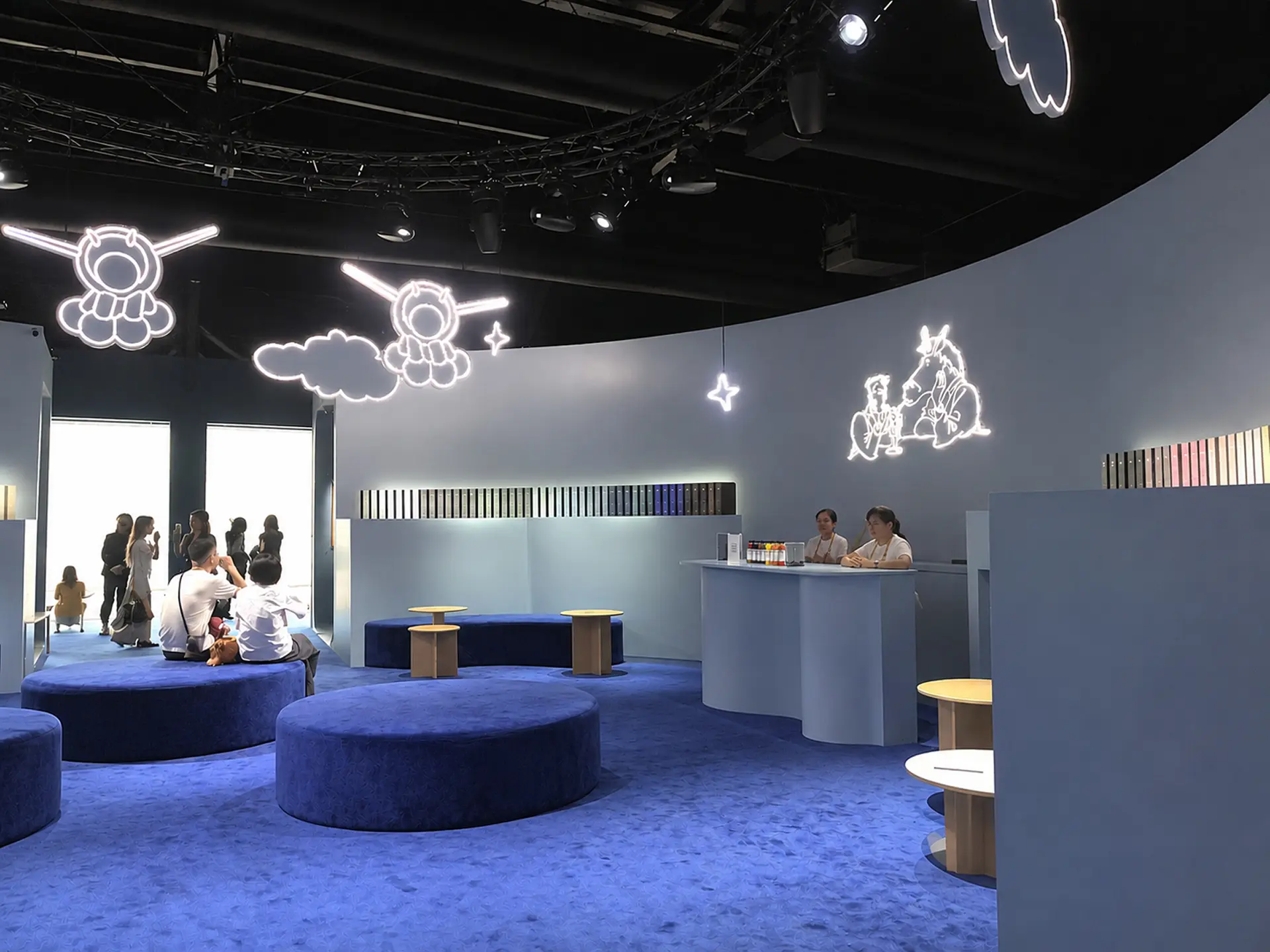
Seating, shade or shelter, washrooms, somewhere to put a bag down, somewhere to feed a child, or whether the route works with a pram, wheelchair or walking stick are often classified as operational matters rather than experience considerations. We think that distinction is misleading.
For an audience whose measure of success may simply be time spent pleasantly together, comfort is part of the experience. A bench in the right place can sometimes contribute more to dwell time than another interactive, at a fraction of the cost. Where that comfort appears in the journey matters too. A group that arrives hot, carrying bags, with a child who needs the washroom is not yet ready for the story we have prepared. Until those needs are settled, the quality of the content may make very little difference because they may not stay long enough to encounter it.
A group that finds somewhere to settle tends to stay longer, and the longer they stay, the greater the opportunity for the exhibition to reach them. For the brief, this means seating, rest points, access, washrooms and places to regroup should not be left until the operational stage. They influence how much of the exhibition visitors will actually experience.
What Should You Measure Beyond Footfall?
Social visitors are counted, but they are rarely described. They contribute to the headline visitor number and then largely disappear from reporting, because footfall tells us that they came but very little about whether the visit worked for them.
Even without sophisticated visitor tracking, three simple questions can tell us considerably more than footfall alone. Did they talk to each other? Conversation between visitors is one of the clearest signs that something in the exhibition has given the group something to work with. Can they name one thing on the way out, without being prompted towards the answer? This is not intended as a comprehension test. We simply want to know whether anything stayed. And will they tell someone about the exhibition, and what will they say? For a free exhibition, word of mouth can be one of the most important engines of visitorship.
That last question has become one of our favourites. It is quick to ask, and the answer is often revealing.
If You Are Commissioning a Public Exhibition
If your brief includes the words “general public”, it is worth asking four questions before design begins:
- Who exactly do we mean by “general public”, and why are they likely to come?
- What should someone get from the first few minutes?
- Where are we assuming knowledge or interest that the visitor may not have?
- Beyond footfall, how will we know whether the visit worked?
These questions do not reduce the depth or integrity of an exhibition. They help make sure that the knowledge, research and stories within it have a chance to reach the people the exhibition was created for.
The General Public Is Not a Secondary Audience
We have sat in many briefing meetings where this audience is described simply as the general public. The phrase often appears only after the other audiences have been named: the enthusiasts, the school groups, the invited guests and the specialists.
We would offer a different reading. If your brief lists “general public” as an audience, that should be the beginning of the conversation rather than the end of it.
They are not asking for less. They are asking for a different way in.
And when an exhibition is publicly funded, sits in a public place, or costs nothing to enter, the general public is not a secondary audience. They are who it was built for.
If you are working through these questions for a public exhibition, the HOL team is glad to compare notes early, while the audience and brief are still taking shape. Let’s talk.
Questions this might raise
Why do visitors walk past good exhibition content?
It is not always a lack of interest. Many came for the company rather than the subject, and a group can move at the pace of its least confident member. If the first encounter assumes knowledge, whoever might be asked to explain may quietly move on, and the group with them.
How do you know whether a free public exhibition worked, if not by footfall?
Footfall shows that someone entered. It does not show whether they enjoyed being there, talked about what they saw, how long they stayed, or left with a reason to return. Useful additional signals are whether visitors talk about what they see, whether anything stays with them, and whether they tell someone about the exhibition. When entry is free, word of mouth is one of the most important drivers of visitorship.
Does designing for the general public mean simplifying the content?
No. The depth, scholarship and research stay. What changes is the number of ways into the subject, so someone with no background can take part and someone who becomes interested can go much further. The general public is not asking for less; they are asking for a different way in.
How do you design an exhibition for visitors who know nothing about the subject?
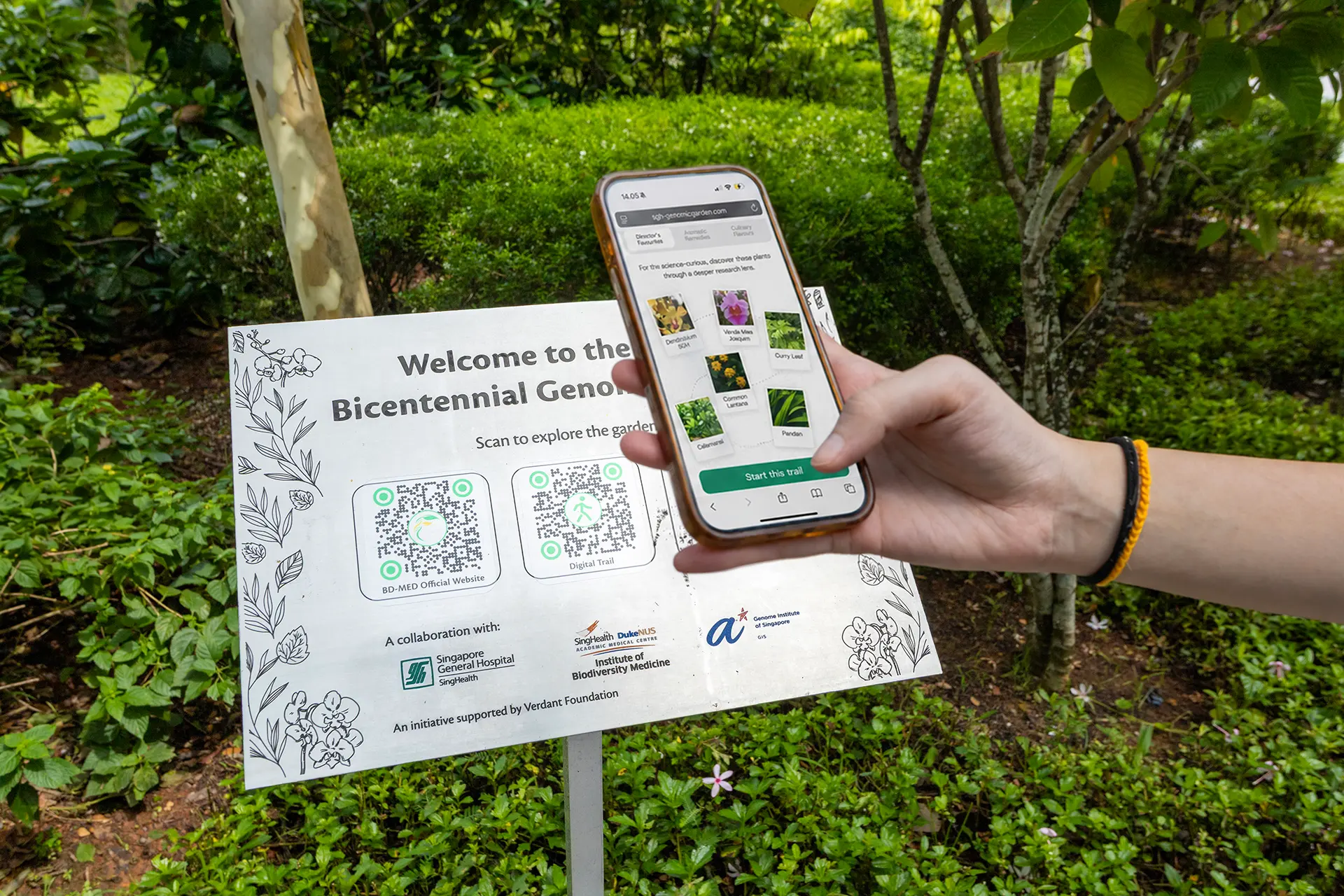
Make it safe not to know. Put plain language first, assume no prior knowledge in the first layer, and offer a visual, physical or personal way in. A small 2025 study at the American Museum of Natural History, analysing 27 family interactions with facilitators, found that 92% of adults looked closely at an exhibit when the facilitator opened by asking about the family’s experience or what they noticed, against 44% after a quiz-style opener. It points to a possible benefit of starting from the visitor rather than testing them, not a universal rule. At the SGH Bicentennial Genomic Garden, the digital trail HOL designed asks whether a plant is better for cooking or as a remedy before the science follows.
What should a visitor get from the first few minutes?
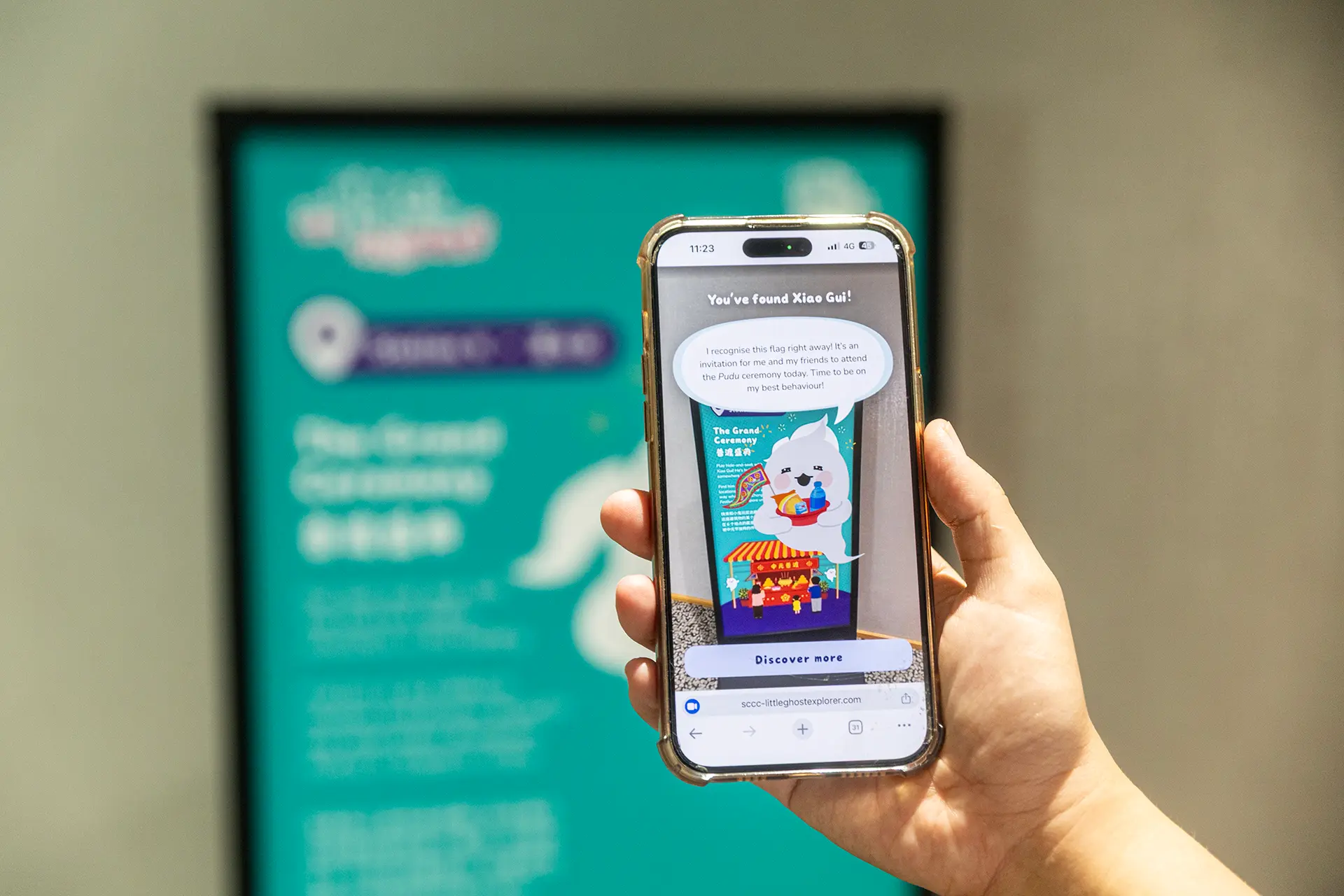
One worthwhile idea they could pass on to someone else, and a reason to keep exploring or come back. The first layer should be complete on its own, with further layers offering more depth, each meaningful in its own right. In Little Ghost Explorer, HOL’s AR trail for the Singapore Chinese Cultural Centre’s Zhong Yuan Festival programme, ghost guide Xiao Gui introduces the subject through speech bubbles, with mini-games and content pages for those who want more.
Why does visitor comfort matter in exhibition design?
For visitors whose measure of success is time spent pleasantly together, comfort is part of the experience. A group that arrives hot, carrying bags, with a child who needs the washroom is not yet ready for the story, and a bench in the right place can sometimes do more for dwell time than another interactive, at a fraction of the cost. Seating, rest points, access and washrooms belong in the brief, not the operational stage.
What should a Project Director ask before briefing a public exhibition?
Four questions, before design begins. Who exactly do we mean by “general public”, and why are they likely to come? What should someone get from the first few minutes? Where are we assuming knowledge or interest the visitor may not have? Beyond footfall, how will we know whether the visit worked? Answering them early gives the research and stories in an exhibition a chance to reach the people it was built for. HOL’s Workflow and Risk Mitigation Process™ settles questions like these at the Core Narrative and Experience Masterplan stages, before design begins.